

.png)

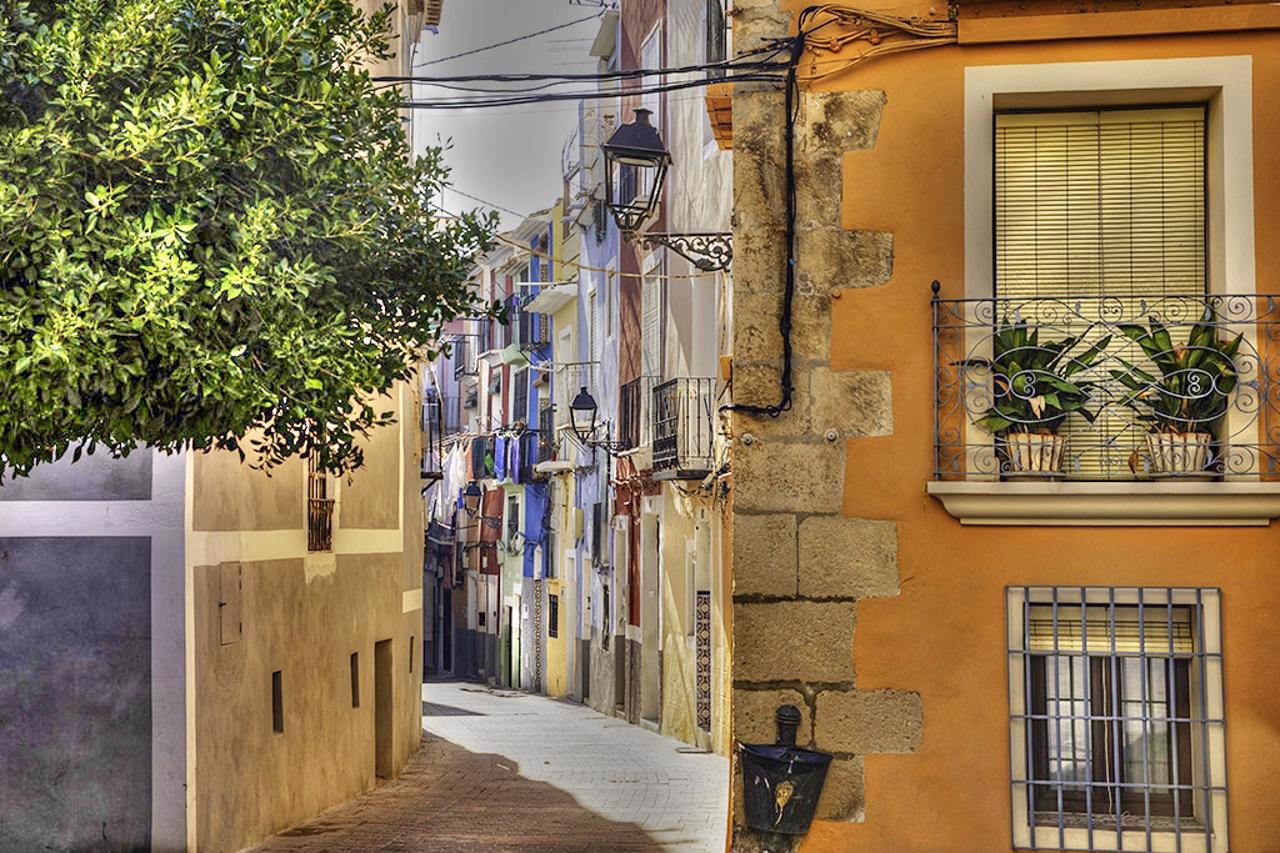
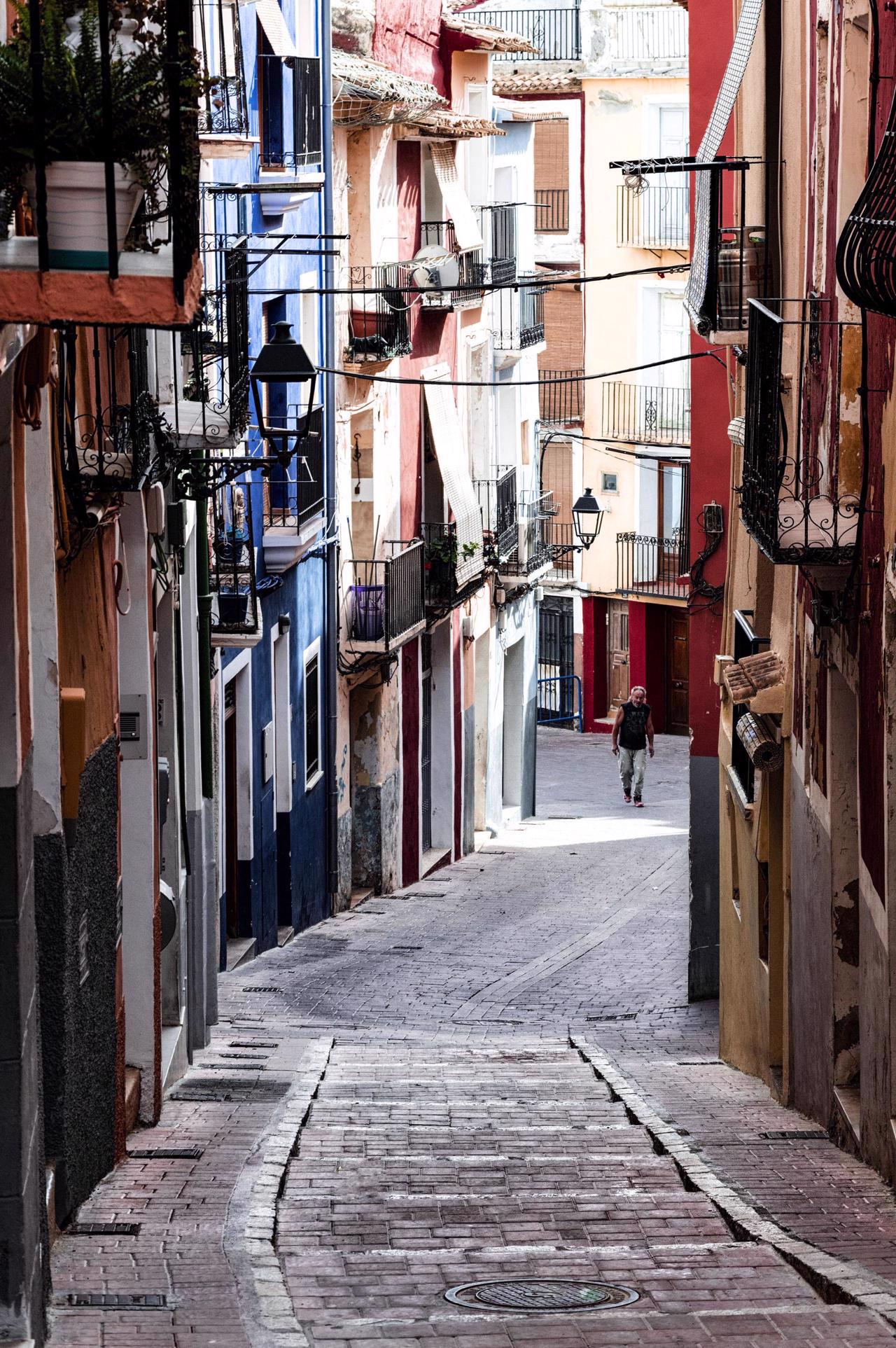
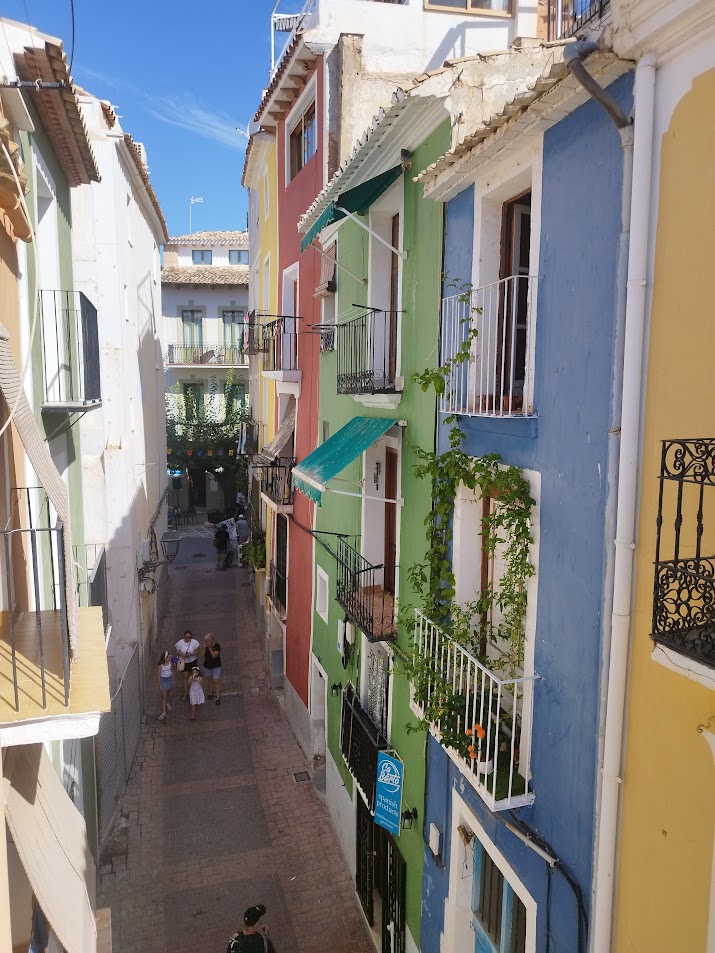
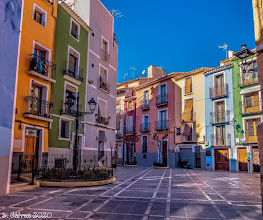
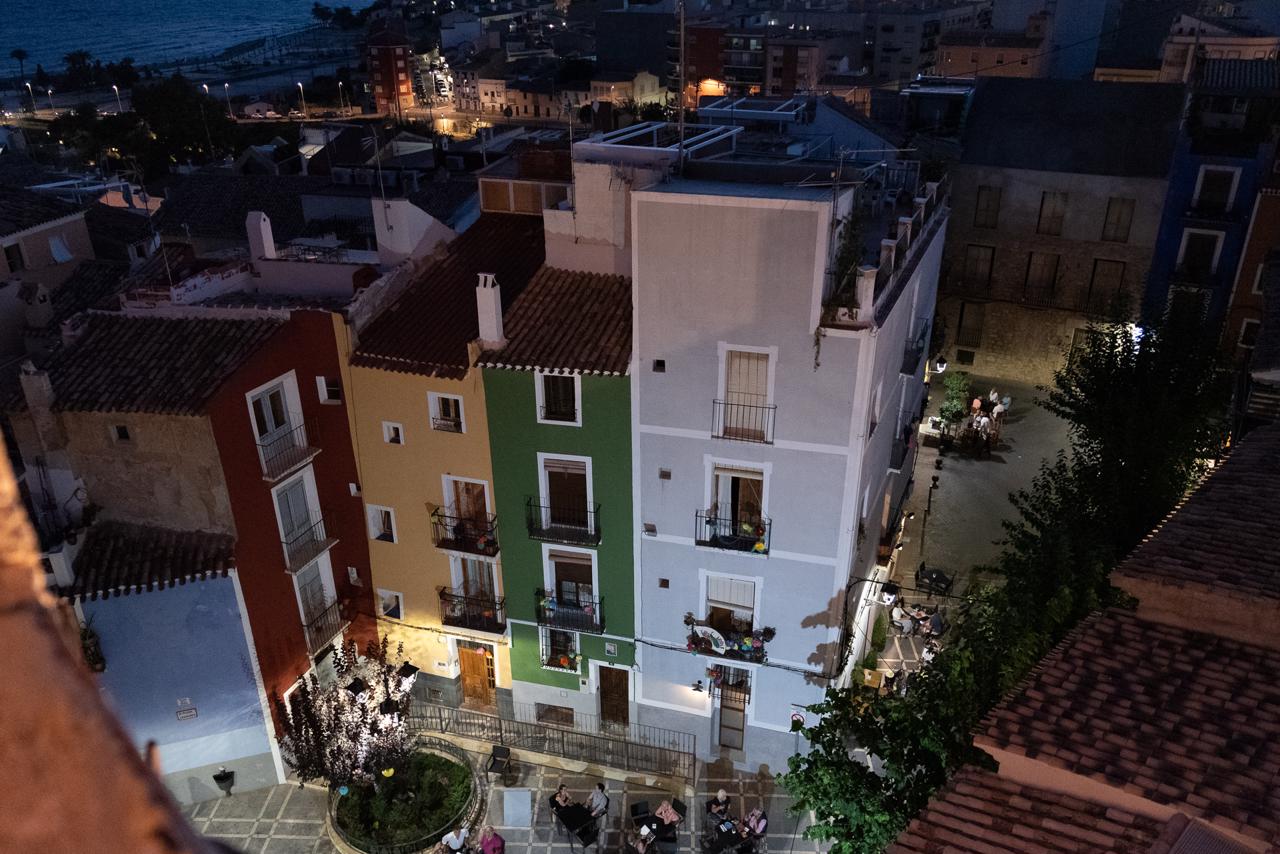
La Vila Joiosa is a place of color. The old town of La Vila Joiosa has preserved its traditional architecture intact to this day. It has been designated a Site of Cultural Interest, and, as noted in its designation as a Historic District, “it is perhaps the best-preserved historic center in the Valencian Community.”
Vila Joiosa was not a town of noble families but rather of fishermen, sailors, merchants, and industrialists, which is why we find almost no ashlar architecture here, but rather traditional plastered masonry houses painted in different colors—making it the best-preserved example of traditional polychromatic architecture in the Western Mediterranean, alongside Girona, Malta, or certain neighborhoods in Venice.
Its cheerful facades invite us to stroll through its narrow streets and explore this colorful labyrinth, discovering the countless details hidden within: decorated eaves, niches, ironwork, balconies…
Within this Historic District, we find two unique monuments that have also been designated Assets of Cultural Interest: the Church-Fortress of Our Lady of the Assumption, one of only three church-fortresses in the province of Alicante, and the City Walls, a unique example of pre-bastioned Renaissance city walls.
Walls
From the 16th to the 18th century, La Vila Joiosa was the target of major invasions by Turkish and Algerian pirates, as well as other military conflicts. As a result of a major pirate attack in 1538 (the historical origin of the Moors and Christians festival) and another in 1543 that razed the town to the ground, a Royal Decree was issued in the middle of the century to rebuild the city walls.
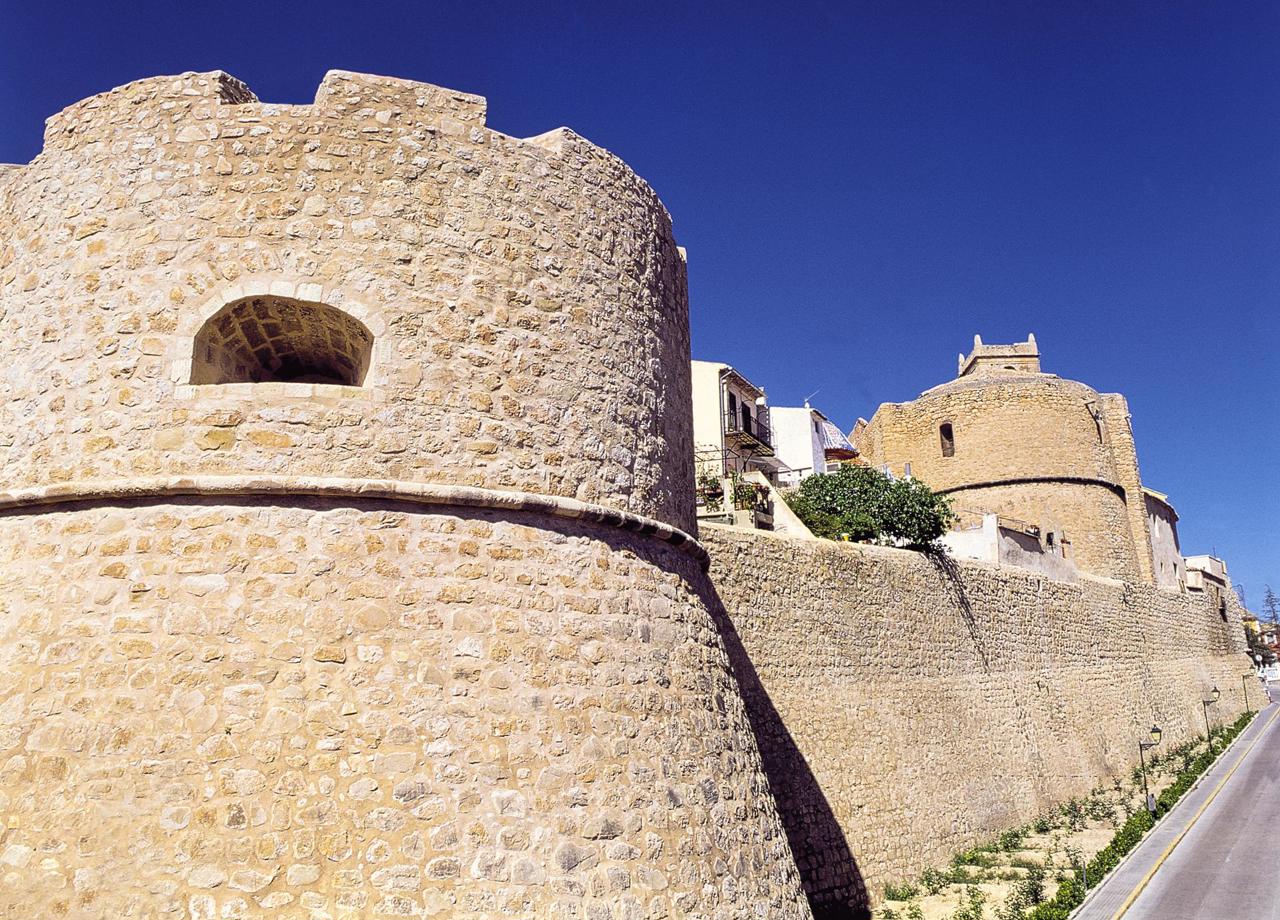
We know from an engraving that, in the last third of the 16th century, La Vila Joiosa was surrounded by a walled enclosure with three circular bastions,the lower parts of whichwere sloped to better withstand cannon fire.
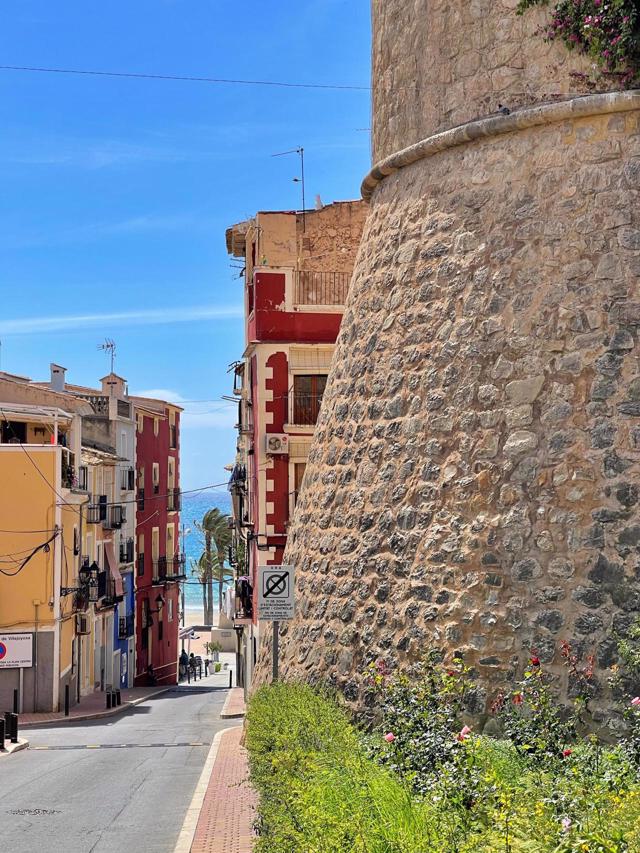
Currently, two sections of the wall remain intact: the west and northeast sections. The latter runs along the Mar coastline, between two circular towers: the one closest to the sea is the “Baluard del Pou” (Well Bastion), because behind it was the town’s most important well, the “Pou de Sant Vicent,” and the other is the “Baluard del Retor” (Priest’s Bastion) due to its proximity to the abbey. A strong defensive structure has recently been discovered on the facade of a house on Costereta Street, exactly where the third bastion—the Portalet—once stood. With this discovery and its restoration, the last of the three Renaissance towers has been recovered; together with the late-Medieval castle located at the western corner of the walled city (next to the “Baluard del Portalet”), made La Vila Joiosa—as a capital city required to maintain a state of defense—one of the best-artilled fortresses in the kingdom.
The walls of La Vila Joiosa are an example of “pre-bastioned Renaissance city walls, that is, a ‘style’ that was very short-lived and disappeared with the widespread adoption of the ‘Vauban’ layout (consisting of massive bastions, often triangular in shape, that form star-shaped fortresses).” For this reason, the walls of La Vila Joiosa are exceptional and marked the end of an ancient medieval defense system. The Church of the Assumption itself, built in the Catalan Gothic style, is integrated into the wall as a fortress-church; in fact, its large apse serves as the wall’s main tower.
These walls were designated a Site of Cultural Interest in 1985.

Fortress Church
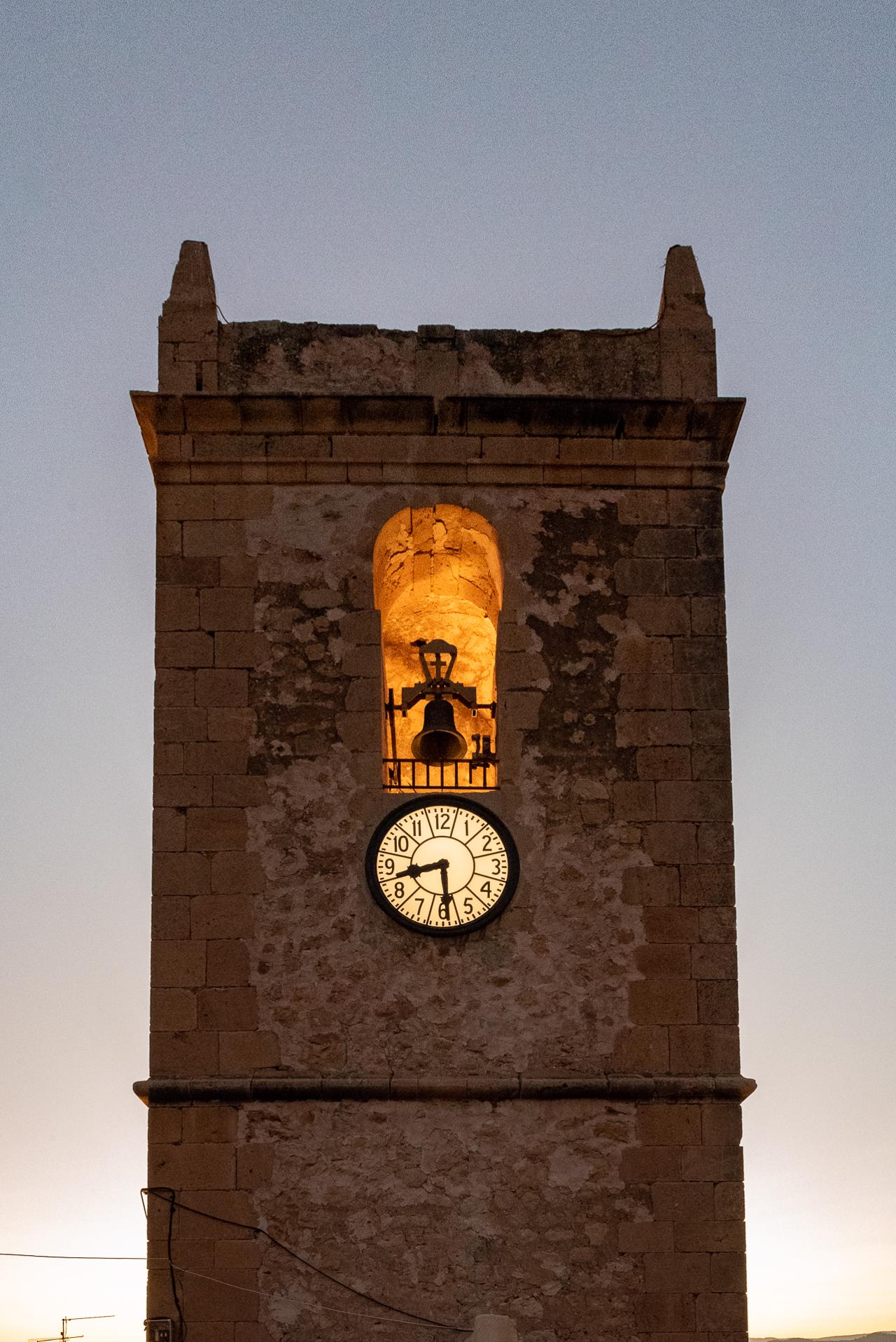
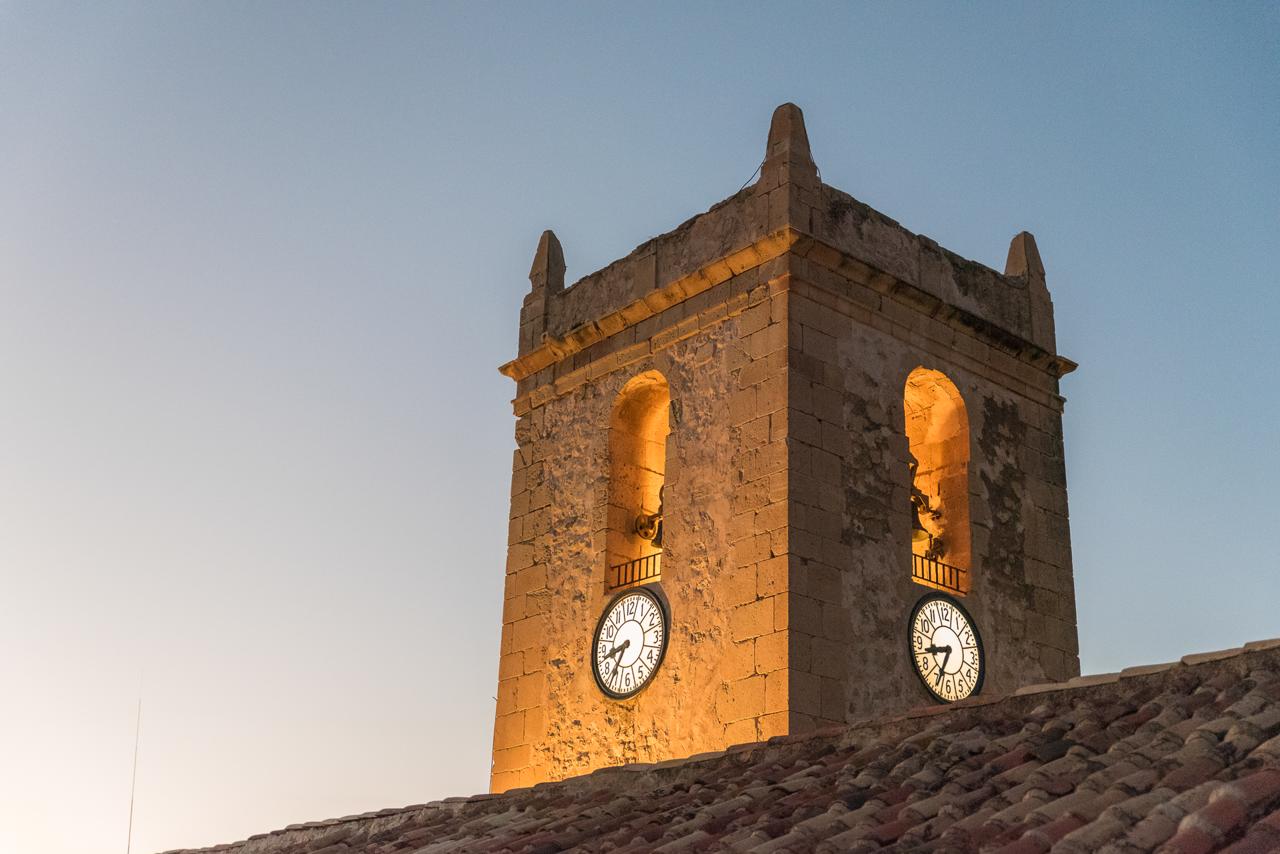
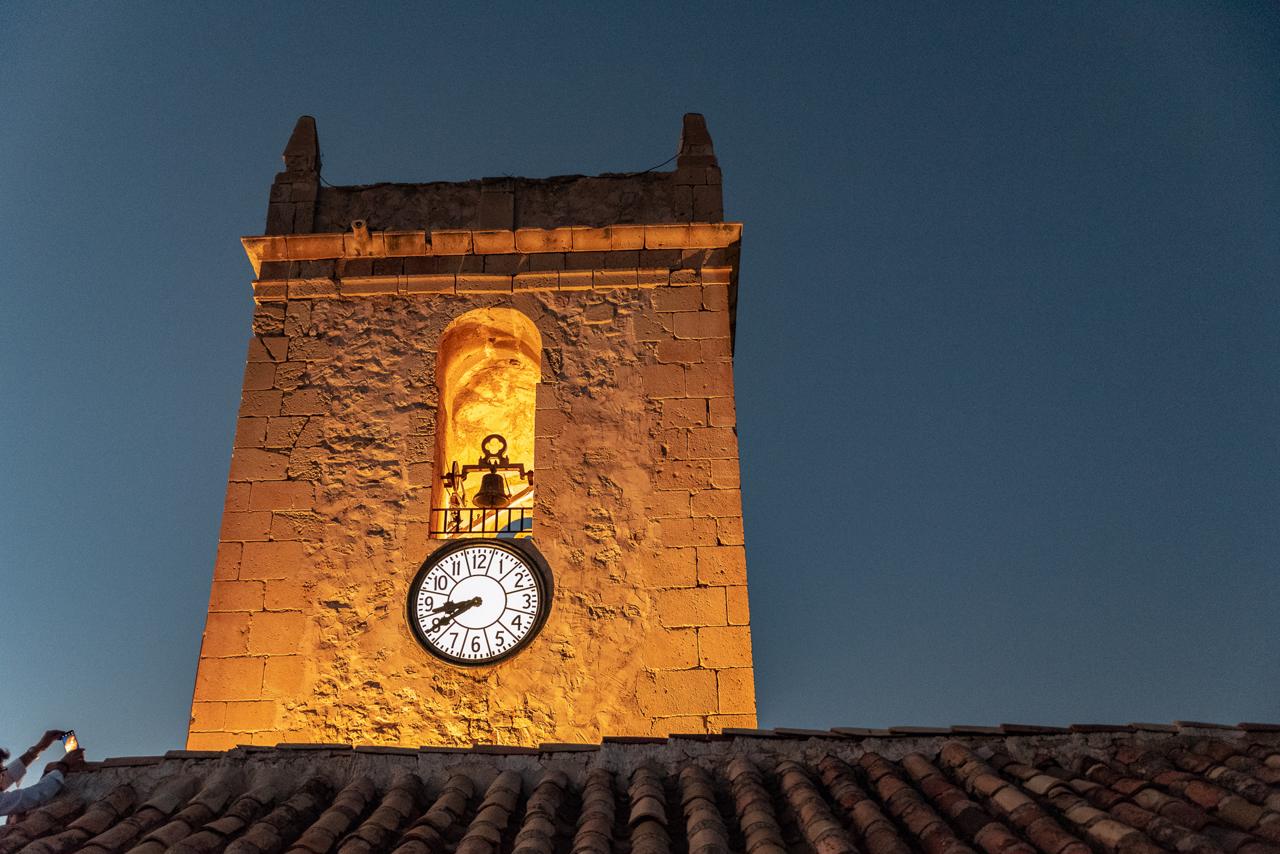
The Church of Our Lady of the Assumption is one of the Sites of Cultural Interest found in the Historic Center of La Vila Joiosa, which as a whole has also been designated a Site of Cultural Interest. It is one of only three fortress churches in the province of Alicante.
Like the city walls, it has the outward appearance of a military structure built for defense. The apse forms a massive tower of the Renaissance-style wall, with very thick walls and very few windows. Its most distinctive feature is the parapet walk around the roof, equipped with arrowslits for firing at attackers and featuring a few cannon-shaped gargoyles to throw the enemy off guard.

In fact, La Vila Joiosa, as the capital of one of the kingdom’s ten districts responsible for anti-piracy defense in the 16th century, was one of the best-armed fortresses in Valencia. A visit to this rampart walk is highly recommended, not only to discover the inner workings of a religious building with a military appearance, but also for the views.
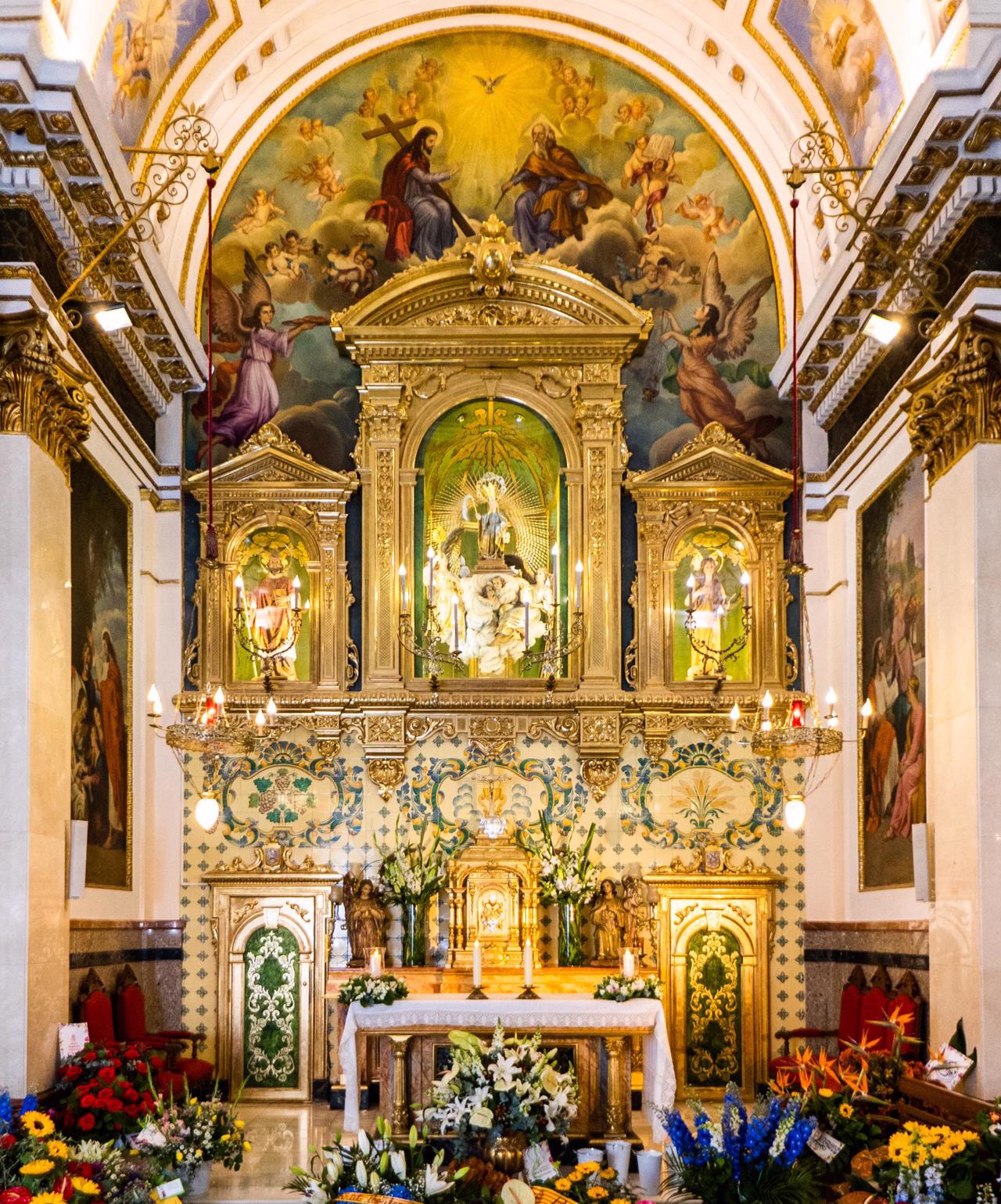
Inside, the church—built in the Levantine Gothic style—features a single nave, chapels between buttresses, and minimal decoration. The exception is the chapel dedicated to the city’s patron saint, Saint Martha, which was consecrated in 1740. It features many decorative elements and houses a 17th-century image of the saint, complete with her characteristic attributes: a small cube and a hisop (a sprinkler for holy water) with which she subdued a dragon.
Castle
La Vila Joiosa was founded in 1301 by Bernat d’En Sarrià, admiral to King Jaume II. It was a *pobla nova*—that is, a newly founded town that did not exist before—although it was built on the ruins of an ancient Roman city. On this hill, next to the town, a late-Medieval castle with a rectangular floor plan and square towers at its corners was erected, surrounded by a moat. This castle served as the residence of the lord of the town and was completely destroyed in 1708 during the War of the Spanish Succession. The stones from this castle were used by the local residents to build the San Cristóbal suburb.
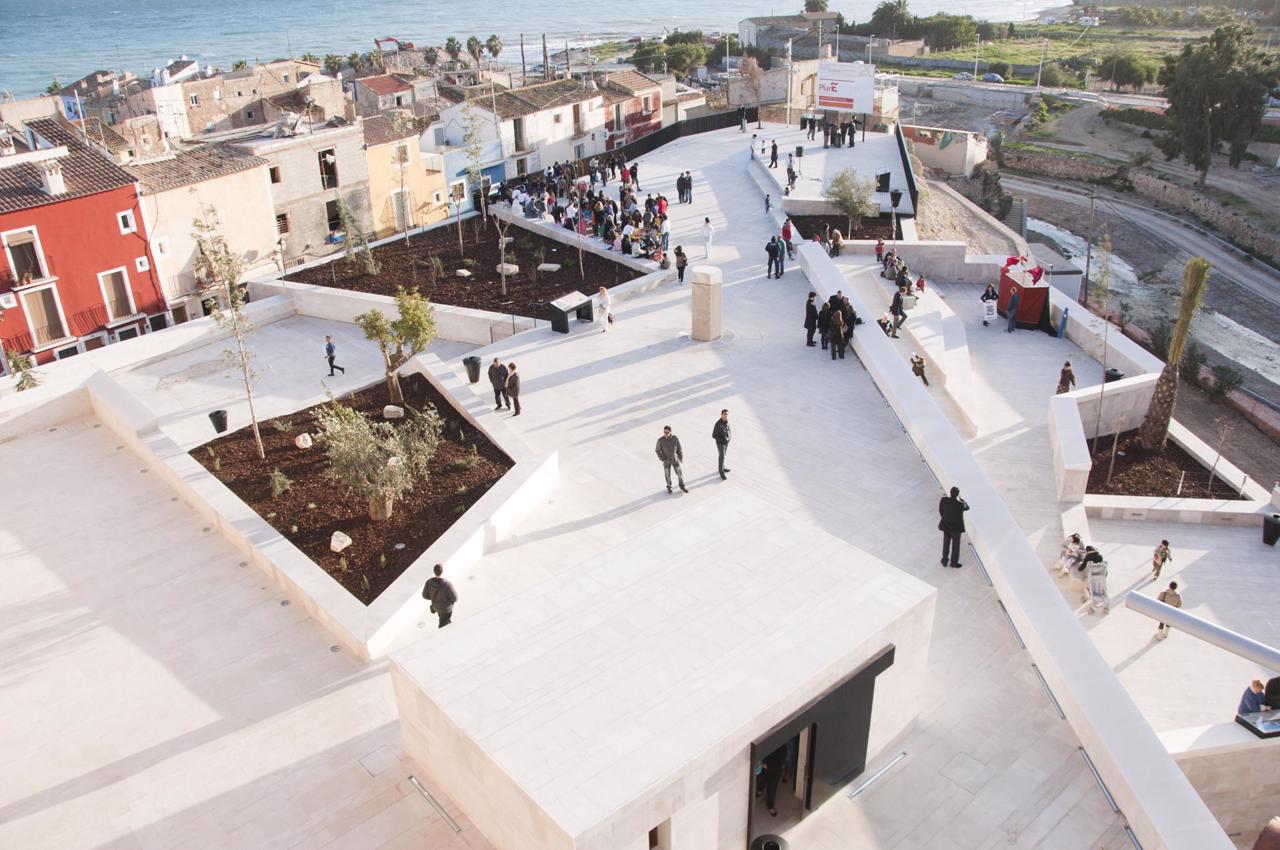
However, the site where this castle once stood retained the name “El Castell,” and in 2009, after archaeological excavations showed that no remains of it were left, a cultural park was built there. The only feature uncovered during those excavations was an aqueduct one and a half meters high; a section of its vault can be seen in the park.
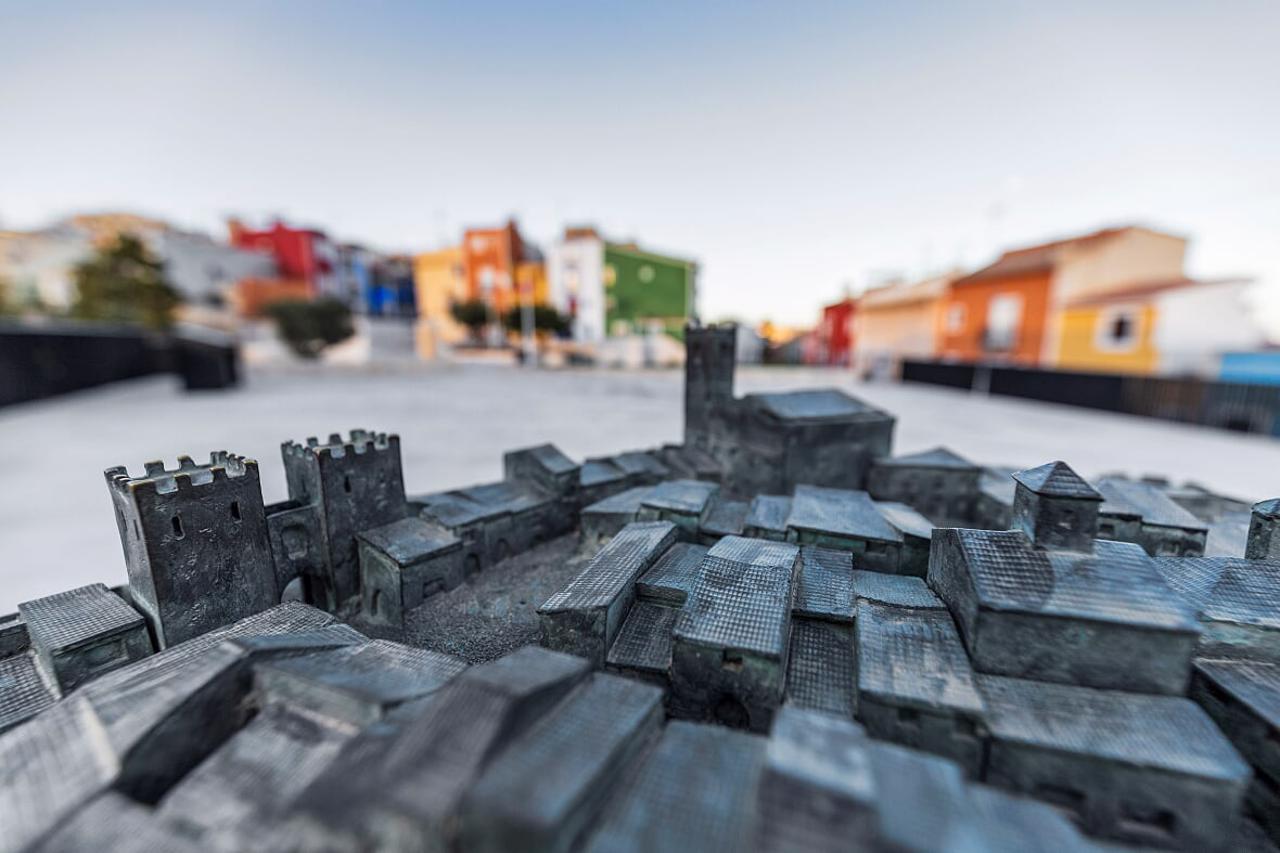
The castle of La Vila Joiosa served as the center for organizing and coordinating all anti-piracy defenses under the La Vila Joiosa defense system, which covered the entire Marina Baixa region. That is why in this cultural park, “El Castell,” we find various informational panels explaining how anti-piracy defenses were organized from the 16th to the 18th centuries and detailing the Moors and Christians festival—designated a Festival of International Tourist Interest—which has its origins in the pirate attack of 1538. There is also a scale model of La Vila Joiosa’s old town that allows visitors to visually and physically explore where the castle was located and what it looked like.

Houses on the City Wall
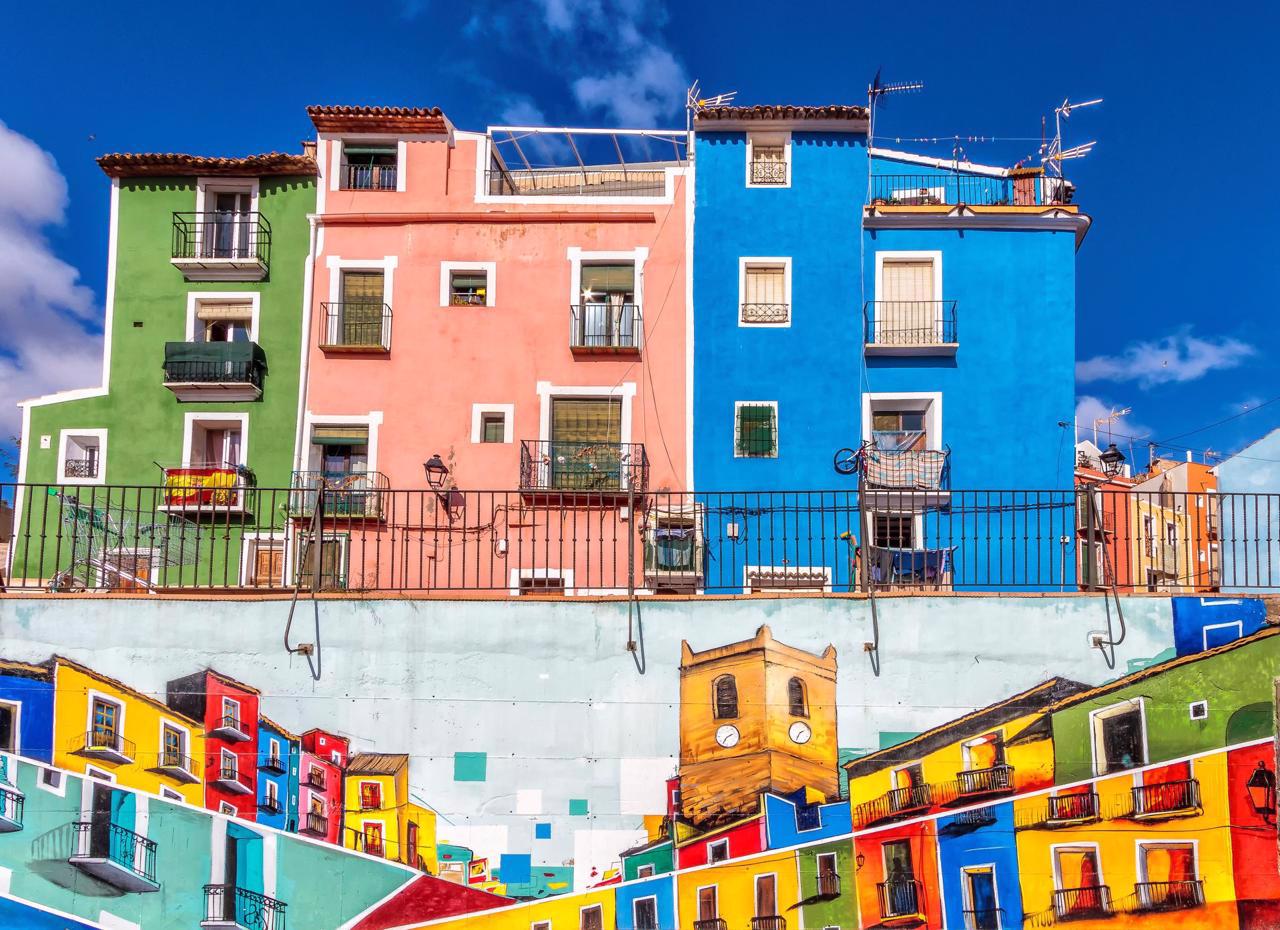
The most “typical” view of La Vila Joiosa is this canvas of stone and color that we see from the highway bridge or from the south bank of the Amadorio River as it nears its mouth. The stones of the Renaissance walls and the characteristic colors of La Vila Joiosa’s Historic Center—one of the best-preserved examples of polychromatic architecture in the western Mediterranean—demonstrate how these spaces have adapted to different historical periods.
After the Barbary pirates destroyed the city walls and church in 1543, a Royal Decree authorized the reconstruction of these buildings, since La Vila Joiosa—the capital of one of the kingdom’s ten districts responsible for anti-piracy defense— not be one of the kingdom’s best-armed fortresses.

With the revenue from the silk tax, the “Generalitat” of the time financed the city wall that bordered the city along the Amadorio River. During the War of the Spanish Succession, La Vila Joiosa, along with Alicante, was the last city to surrender, and the Bourbon troops destroyed the city gates. Although La Vila Joiosa continued to suffer pirate attacks throughout the 18th century, by the end of the century the Algerian threat had disappeared and the city wall was no longer needed. It was from that point on that residents began building on top of it, unwittingly creating what would become the most photographed image of La Vila Joiosa.
A stroll along the Amadorio Riverbed—which has been revitalized and turned into a park—allows us not only to enjoy a green oasis in the heart of the city, but also to admire these colorful houses on the city wall from different angles. Interestingly, in this park—on the other side of the river—we find another unique building in La Vila Joiosa: the “Molí Reial de la Llobeta,” which is currently undergoing restoration.

Paseo San Pedro
The “Passeig Sant Pere,” which runs along the Roman port of Allon, is one of the most charming spots in the Old Town of La Vila Joiosa. It is located across from the central beach, on the right side of the Costera de la Mar, and thus forms part of the town’s waterfront. The seaside quarter, which extends all the way to the beach, dates back to the 18th century, when population growth made it necessary to build outside the city walls.

In the 19th century, this promenade was known as “Rincón de la Habana,” not only because of its colorful facades, but also because La Vila was a very important port at that time.
From here, large sailing ships loaded with manufactured goods—especially those produced in Alcoy, such as cigarette paper and fabrics—set sail for overseas colonies, including Cuba.
During the 20th century, the festival of Saint Peter—the former patron saint of fishermen—was celebrated here. In addition to the maypole, boat races, and a fair, people played a game called “Basi.” The game involved dyeing the water in the fountain red and tossing coins into it for the children to find.